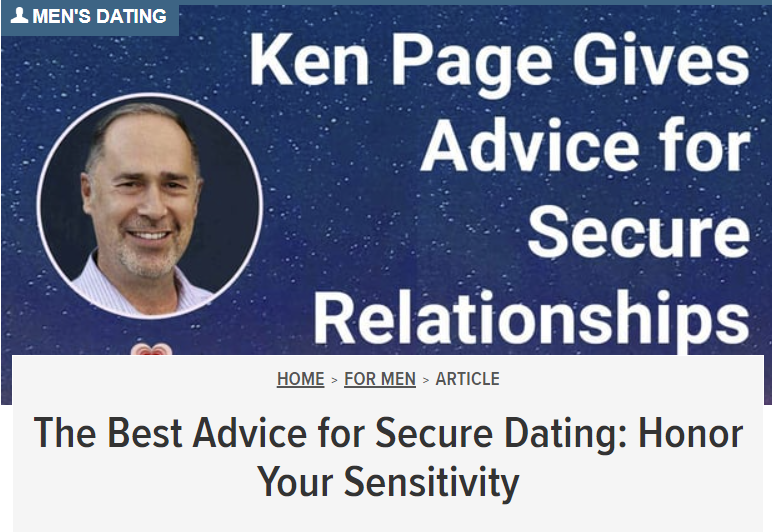
How do I know if you’re in the right relationship? This episode will offer you the tools you need to find your own answers to this life defining question.
If you love the Show, please Subscribe, Rate, Review and Share on Apple Podcasts, or your favorite Podcast Platform! Click here to learn how.
Listen For
- 13:06 – How To Identify Deal Breakers And Get Out ASAP
- 19:06 – What Feels Good And Right In Your Relationship?
- 22:28 – What Feels Wrong And Missing In Your Relationship
- 25:58 – Am I Being My Truest Self With My Partner?
- 31:02 – Why Cohabitation Often Leads To Divorce
- 33:23 – What You Should And Should Not Do
- 37:44 – Helpful Pieces And Information On Finding The Right Relationship
- 40:22 – Why Love Is Not Lost Even If It Goes Subterranean
Important Links
Get a copy of Deeper Dating by Ken Page
Join the Coaching and Mentorship Intensive with Ken Page
Connect with us on Instagram
—
Watch the episode here
Listen to the podcast here
How To Know If You Are In The Right Relationship
Welcome to the show. I am Ken Page. I am a psychotherapist. I am the author of the bestselling book, Deeper Dating. Your host here, and the creator of the show. We are going to talk about this huge question, how do I know if this relationship is right for me? Before I jump into that, I just want to say that in this episode and every episode, I share the greatest tools and insights that I know to help you find beautiful real love, keep it growing and alive and heal your life in the process, because the skills of dating are nothing more than the true skills of intimacy and those are some of the greatest skills of all for a rich, meaningful life.
If you want to learn more about this path and what we offer, just go to DeeperDatingPodcast.com. There you can find 220-something episodes at this point and transcripts of each episode. If you want to learn more about this path, you can just go to DeeperDatingGifts.com and there you will get a free eBook, The Five Keys to Deeper Intimacy, with concepts that have gone viral in Psychology Today and elsewhere.
You will be part of my mailing list and community and get to learn so much more about this work. Thank you. Let us jump in now. This question, “Is this relationship right for me?” is a question that I am asked so many times. Even in my intensive, for people mostly who are single and looking for relationships, there are always members who are in a relationship and saying, “Should I be looking for another relationship or should I be working on this one? Is this one right? Am I fooling myself? How do I know?” This is a huge question.
What I want to say about that question first is that if you’re asking that question, this is an important time in your personal history because you are in some type of relationship and you’re wondering, is this what is right for me? Is this a future that I want to commit to? Is this a future that I want to step away from to build a better and different future? These are existential huge choices. Ending a relationship that should be worked on, resuscitated, and supported is not a good thing to do.
Staying in a relationship that is not right for you is not a good thing to do. How do you know the difference? That is what we are going to be talking about in this episode. This is how I want to do that. I want to start out by talking about some things that I, as a psychotherapist, think should be deal breakers. If these things are going on, it is not a good place to be at this point until they’re addressed, or perhaps not at all. We are going to talk about that first.
I am going to ask you some questions that are going to help you think about this relationship in some very, very rich ways. These are some questions that will open doors for you, that are the doors that you should be opening for your future, no matter what. From there, we are going to talk about the signs that this is a right relationship or isn’t.
We are going to talk about how to truly find out, how to test the relationship, how to know, how to live, like Marianne Williamson says, “both feet in until both feet out.” We are going to talk about some powerful techniques to do that. Some steps that you can take to not just be living in your head and thinking, “Is this right for me?” because God knows we could get lost there forever, but actually finding out within the dynamics of the relationship. Let us jump in and begin.
How To Identify Deal Breakers And Get Out ASAP
The first thing I want to talk about is deal breakers. Things that I, as a psychotherapist, consider appropriate deal breakers. Those are absolutely abuse and abusive behavior. Also, active addiction or even if the person is white-knuckling it with an addiction, but they have not been able to remain sober, even if they’re sober for certain small periods, but they’re not getting the deep help and support that they need from hopefully twelve-step programs or potentially elsewhere.
If they’re not getting that deep support, I think that is a deal breaker. Serious psychiatric conditions that are unstabilized, abuse, significant substance abuse, addiction. In all those cases, you want first of all to know that your partner is acknowledging this, acknowledging it as a deep problem, and really working on it. When it comes to abuse, my bias is get out of there. Get out of there. You do not want to be in an abusive situation.

Right Relationship: When it comes to abusive situations, get out of them as soon as you can.
If your partner does the years of work that they are going to need to do to deal with that, and you see that, and they come back to you years later having done the work, I still think it is risky, but that is a different story. My personal feeling is get away. That is not easy, and you may need support. Heavy, heavy stuff, I know, but I personally think that those things are all deal breakers. In terms of serious psychiatric conditions, I do not mean some depression, some anxiety, I mean more serious psychiatric conditions like bipolar disorder or major depressive disorder.
For example, people who are in a relationship with someone who experiences major depressive disorder that is not stabilized or treated, the chances of divorce are over 90%, from what I’ve heard. The most important thing here is and we’re putting abuse in a separate category because my feeling is get out. That is just my feeling. Let me just say, if you cannot get out or it is too hard to get out, just get support. Get support.
It may take you a number of times to be able to get out, and it may need ongoing support. The people who love you may be saying, “My God, what are you doing? Stop, stop.” You cannot stop. It is okay. Keep getting support. Those, I think, are deal breakers, and I just really wanted to mention that first. Substance abuse, active substance abuse, where you’re not getting help. Serious psychiatric disorders that are not stabilized. Abuse. Cheating. That is a complex one.
That might be, in my opinion, this is just my opinion, I would not say that that would always be a deal breaker, but I think it is a really, really serious warning sign that there is a very good chance that the character of the person you’re with is going to make it so that this is not a good place to be. I am going to put that into the category of major, major, major, major, major red flags. Lying. Please feel free to pop those babies into the realm of deal breakers. Personally, I would. Someone who chronically lies, narcissism.
These are all really, really serious things. In these extreme conditions, what I would recommend to you if you’re not clear is get support. That is our deal-breaker section. Now I want to move on to what I think is the most essential next step outside of these deal breakers. I am going to ask you some questions here, and they’re really key. The first question I want to ask you, again, outside of these deal-breaker areas, which are simply not okay.
Those have to stop, you have to be gone. Just not okay because you’re not going to find happiness there. This is my bias. Everyone else, everyone in different. Let me say one other thing, too. If any of the things I mentioned are you, then I would say the same thing to you. You need to get that deep help. You need to get that stabilization, or you are not a good partner to be with at this time. It does not mean you’re not a good soul with a good heart. It just means that because of these things, you are not in a place where you’re going to be able to be a good partner.
What Feels Good And Right In Your Relationship?
Barring these things, let us jump into some really fabulous, important questions. Number one. Thinking about your partner. I would like you to just now, and you could pause the recording if you want, make a list of what feels right and good in this relationship. What things feel right and good in your chemistry, in the way that you connect, in the quality of your interactions?
I want you to really give yourself time with that. I think that this gratitude piece is so important. It is like if you hold up a half-dollar coin or a dollar coin to the sun. It is going to block the whole sun, but the sun is really, really big. This little coin blocks it. That is what our feelings are like at the moment. It is important to go into some of the underlying feelings. This is one way to do it by answering these questions. What feels right about your partner’s character? About who they are in the world? About who they have chosen to be? About who they are with you? Just make a list of those things.
What Feels Wrong And Missing In Your Relationship
Take all the time you need. Next. What is missing in the relationship for you? What feels not right? Those are two different things. Start with what feels not right, things that just do not feel right for you. List those because they all matter. They all matter. Take a moment to let yourself do that. You can pause and take as long as you want. The next question is, what is missing that you would like to have there? This could be in the emotional arena, the action arena, the sexual arena, or any of these arenas.
I think it is so important to put these things into words, not only because this is the pathway to truly find out if this person is right for us or not, but because it is a pathway to discover who you are. When you think about what is not feeling right, it teaches you about your deepest values. When you think about what is missing, it teaches you about your deepest longings and what I call your Core Gifts. Answer those questions. What is feeling right? What is feeling wrong? What is missing that you desire? That is the next step.
When you think about the things you feel wrong in a relationship, it teaches you about your deepest values. When you think about what is missing, you discover your core gifts. Share on XOnce you have done that, now let us go into what I think some of the signs are that this is a good relationship, and hence the reverse, that if these things are not true, there is some trouble going on. This may be an indication that it is not the right relationship or simply that there is work to be done, which is the next thing we’re going to be talking about.
This, to me, and it is what I teach all the time, is the North Star question that you should be living with in your dating life, or if you’re in a relationship. Does my soul feel safe and seen? You can ask yourself that in a broad way. In what ways does my soul, my deep self, my true self, feel safe and seen by this partner? For those of you in polyamorous relationships, these partners? If the answer is yes in significant ways, that is a beautiful and important thing. If the answer is not so much, that is also really important. We’re going to be talking about that a little later.
Am I Being My Truest Self With My Partner?
If the answer is just no, that is really a problem. It is a beautiful, important, and powerful question. A connected question is this, am I being my truest self with my partner? That is another really important question. Are we growing together as a couple? As a couple and individually, are we as a unit working on our relationship? Are we growing? Are we improving? Are we sharing projects? Are we sharing visions? Are we sharing growth for ourselves? Are we sharing growth for ourselves as a couple? Are we supporting each other in each other’s individual growth?
Are we cheerleaders for each other? Another really important question. Do I feel chosen by my partner? Like, do they mean it? That they really love me and really want to be with me and are really committed? That is such a big question, and it feels so good to know that the answer is yes to that. It feels like standing on a wobbly ladder forever to not feel that. That is another question. Are you having the good fights together? What do I mean by good fights?
Harville Hendrix, the brilliant couples therapist, says that in every couplehood there comes a point where the things you most want from your partner are the things that they’re least able to give you. That is not the end of love, that is the beginning of love if you choose to have the good “fights,” “conflict,” where you bring this to the surface and work on it together, because you’re doing that to your partner and your partner is doing that to you.
Are you both consciously working on that? If so, that is pretty amazing and wonderful and important. There is a wonderful, wonderful book by John and Julie Gottman called Fight Right. It is a book I highly recommend. It is research-based and teaches you as a couple how to do that. Another piece of gold from the Gottmans through their extensive, extensive research is that they found that a relationship that is capable of lasting, if you look at interactions over time, there are five interactions that are either positive, supportive, or at least okay compared to one negative interaction.

Fight Right: How Successful Couples Turn Conflict Into Connection
There needs to be a, if you have a five-to-one ratio of interactions that feel good, connected, to ones that feel off or broken or not right, you have a really good chance. They’re able to forecast divorce by anything less than that five-to-one ratio. That is something to keep an eye out on. Another is there some kind of sense of ease between the two of you? A rightness, a comfort.
I do not mean always, God knows, but I mean in some significant way. A friend of mine’s mom once said to her, she is heterosexual and she was dating, and her mom said to her, “Men are like shoes. When you go into the shoe store, you do not want to leave with this fabulous shoe that pinches your foot and say, I know it’ll loosen up and get better over time. You want to leave the store with a shoe that looks good and feels comfortable.”
Same thing in a relationship, too. There has to be some general sense that the two of you get along. That there is some kind of inherent stream of positive intent. Not necessarily during the storms and the difficult times, but overall. Is there a sense of trust? Can you trust your partner to essentially tell the truth even when it is hard, to have your back, to be good and decent, to be willing to listen to you, to not want to cause you pain, always imperfectly, but essentially? Those are the questions that I think are the questions that mark either a relationship that is really good or one that, at best, needs work.
Why Cohabitation Often Leads To Divorce
I just want to take a little sideline detour here and talk about something else. It turns out the research showed that couples who cohabitate before marrying often have a higher rate of divorce than those who go into living together knowing that they are either engaged or married. I know that might feel like an old standard, but it does point out something. We’re talking about research from 2003 and 2004, but it does point out something really important.
If you’ve slipped into a committed relationship without that marker of we look into each other’s eyes and say, “Yes, I choose this,” there is a greater chance that it is not going to work. That planting of a flag, however it is that you do it, means two really important things. One, it is a ritualized acknowledgement and a promise. Two, you do that because you really mean it and because you know your partner means it. That is really a big deal.
Just one little example of that is that I’ve had many clients who live in New York City, and it is a tight housing market there. I know many couples who loved each other, and they were interested in each other. They would not have necessarily moved in together quite yet, but one of their leases ran out, and what were they going to do? Take out another year’s lease? They moved in together because it just seemed smart.
Again and again, I have seen those relationships fail because the psyche of the person who is moving in and the psyche of the person whose home it is somehow was not quite ready. They eased into it because of the housing market, and that got them in trouble. I think it is really important that we do not live in a relationship where it never feels like I choose and I am chosen. That is a really important thing. Now what do you do?
What You Should And Should Not Do
You have got these questions, and maybe some of them are answered, and maybe some of them are not answered. Let me start with what I think you really should not do. That is just try to figure this out in your head. I think that is a cop-out. I think what you need to do is to live these questions in the relationship. Articulate your hard asks and ask them. Listen to your partner’s hard asks. See if you can meet them. Share the parts of yourself who are truly you that maybe you’ve been afraid to share.
Do not share them in ways that are to be hurtful and emotionally harsh. Share them as a gift to your partner. All of us have secret spaces that we’re just shy about revealing. For me, with Greg, one of those is my feelings of need for him. That is embarrassing. That is hard. Luckily, he is wonderful, and that does not scare him off and make him want to run, but it scares me to show my need for him, my dependence on him. The way I feel empty when we’re not connected and full when we are.
Do not share your desires in a hurtful or emotionally harsh way. Share them as a gift to your partner. Share on XThose are embarrassing for me, especially growing up in this culture as a gay man and as a man. That kind of dependence and need is a really vulnerable thing to show. The more I show it, the more beautiful our love gets. The happier I feel. The safer he feels, the more cherished he feels. Not all examples are that easy, but that is just one that I want to share. What are your deeper wants?
Let us look at all of the three questions we asked before. What are the parts of your partner that you value? A. – Tell them. Share those parts. Share your appreciation. That is so delicious for love, and it is embarrassing, and it is scary, but tell your partner what you respect about them. Say those words. We do not do this. It is indescribable how much that ups the Eros, the love, the warmth, and the safety in a relationship. It is hard, I know, but do it and do it for each other. That is one thing.
The things that do not feel right. You need to be able to talk about those with your partner, too. I encourage you to use the rules of feedback, the rules of nonviolent communication, go to the Gottmans’ book, Fight Right, and use those techniques so that you can do this in a good way, because you need to do it. They say in twelve-step programs, “Say what you mean, mean what you say, and do not say it mean.” That just says so, so much. Next. The things that are missing.
That is a tender one, but it is a really important one. Start sharing with your partner the things that you’re longing for. The ways you want to be touched, the ways you want to be talked to, the adventures that you want to have. You sharing those things from your own longing and your desire and explaining why they matter is actually often going to be experienced as a gift by your partner.
Helpful Pieces And Information On Finding The Right Relationship
When you do it from the place of these are their deficits, and they need to fix them, well, that is not going to feel like a gift to them. If you do it from your desire for more love, more closeness, more connection that you’re calling them into and inviting them into, that is a gift. I just want to share a few little pieces of research and information here.

Right Relationship: You should be able to talk with your partner about the things that do not feel right, just as much as what you value and appreciate in them.
I encourage everybody to watch Eli Finkel‘s YouTube video, The Marriage Hack. Eli Finkel is a brilliant, brilliant researcher of intimacy and relationships. In this video, he does two things. One, he points out that the average relationship sinks over time in its quality of communication and connectedness. This is the standard. The graph shows a decline over the years.
All of us in long-term relationships know how easy it is for that to happen. He also teaches something else that he calls The Marriage Hack, which is a technique which is very quick and very powerful, that does not necessarily ramp you back up again. The ideas I just shared with you will ramp you back up again in many, many cases, but what this marriage hack technique does is it plateaus so that your relationship quality does not keep sinking. All of you should know this. All of you should do it.
Another thing I want to talk about that I’ve talked about before is David Schnarch’s work. David Schnarch is a brilliant theoretician. He talks about this concept of a crucible that to bend steel, which means to change our personality of characteristics that are problematic, to bend steel, you need a huge amount of contained heat. A crucible does that. If the heat leaks out, it is not going to be hot enough to bend steel. Your relationship is your crucible. By letting your partner know that you need this, that it is not okay to live in a sub-wonderful relationship because you care so much about them, and this is what you need and this is what you want, and have them do that for you, you have now created a crucible where things are at once treasured but also not okay.
Why Love Is Not Lost Even If It Goes Subterranean
Treasured because you care enough to do this hard work. Not okay because there’s something missing, something you long for. You are creating the heat of that crucible that has the potential to change the relationship. If you do not do that, you will make the decision about whether you want to be in this relationship from your head and not from the deeper layers of your being. I want to talk about rivers for a minute.
One really interesting thing about rivers is that the current you see on top does not reflect in many cases the current on the bottom. The Hudson River could look like the top of it is flowing south-north, but undercurrents are going north-south. The top of a river might look calm, but there might be fierce, deadly undertow underneath, or the reverse. Our psyches are like that. What we are feeling in the moment in our relationship does not capture these powerful, powerful, and true undercurrents of what we are feeling underneath.
Doing this in your head, “Should I be in this relationship or not,” is not the way to do it. The way to do it is in a living, dynamic way by answering these questions and by living these challenges inside the relationship. Here is what is going to happen. A few things will happen. One thing that will happen is that the first time you do this, your partner will be like, “What?” They will not get it because you haven’t done this before in many cases, or you haven’t done it fully, or you haven’t explained what you need, or you’ve maybe kind of complained or asked or demanded, but you haven’t operationalized it yet.

Right Relationship: The more you make your desires concrete, the happier your partner will be.
Your partner may not understand. They may not have the same language you do. When you do these asks, the more you operationalize them, my needs for dummies, and really specify. “This is what I want to ask you to do. This is what it would look like. This is, in the most concrete way, what it would look like and what I would like you to do and when I would like you to do it.” The more you make it concrete, the happier they will be in the parts of them where they want to be a good mate to you. These are the steps that we can take. When we take these, when our partner meets us, the juicy warm oozy love thing gets stronger. Desire often comes back.
Appreciation comes back. Maybe just a glimmer of hope comes back. When our partner does not do it we re-explain, we re-explain, we operationalize. Do not forget that step. Make it nitty-gritty. Baby steps, baby steps. Specific things that they really could do, and then when they do them, you will feel better, in most cases. Operationalizing it like that may take a while, but then you may find that they either do it or maybe they are not willing, and then you know that they are not willing, but do not come to that conclusion too easily.
I am going to share a story. My mom and my dad were together until my dad died, and they had a powerful relationship. They’re both Holocaust survivors, and they loved each other. They loved each other. Toward the end, my dad stopped wanting to eat. My mom was so enraged at him. Just enraged. She was so harsh with him. He was so passive-aggressive. It was bad. We were stunned. Me and my sister were stunned by how bad it was. Later, they told us, that at night, they would take each other’s, this makes me want to cry, they would take each other’s hands and they would say, “This is not who we are. Let us do better.”
This was a deep, deep ditch they were in, but they did it. They made their way out of it. When my dad passed, that wound was so much more healed. They were together again. I just want to share that story because sometimes it feels like love goes subterranean, but it does not mean it is not there. If you take these steps, you have a greater chance of reclaiming that love or living this both feet in, both feet out concept so that you know this relationship maybe cannot work or that it can work.
We replicate inner myths again and again until we can grab them consciously and shift them. Share on XWe go through three different stages, and I want to tell you these stages because they really relate to this. The first stage is what are my Core Gifts? Another way to say that for all of you listening is, what are the parts of myself in this relationship that are the most precious, that feel fed, and the ones that do not feel fed? What are those parts that are so deep and so important? Those are my Core Gifts. The second stage is what has been my attraction patterns? We replicate inner myths again and again, and until we can grab those consciously and shift them, we keep replaying them. I just want to say that I just created a course to help people do that. It is a short mini course, and you can just go to DeeperDatingJumpstart.com.
In that course, you will learn to discover your attraction patterns and learn how to transform them as well. That is very exciting to me. I just created that course, but that is the second stage, understanding, what have been my attraction patterns? How are they playing out here? How can I up-level, transform, and shift them? There is a lot of meat on the bones of this session.
These are, I think, what we need to do if we want to discover ourselves in this relationship and discover if this relationship really is right for us. Thank you for listening. I am so happy to have you on this journey. Just go to DeeperDatingPodcast.com, DeeperDatingGifts.com, or DeeperDatingJumpstart.com to be able to dive in and learn more about this work. Thank you all so much.
Important Links
- John and Julie Gottman
- Eli Finkel
- Deeper Dating
- The Five Keys to Deeper Intimacy
- Fight Right
- The Marriage Hack
- Deeper Dating Podcast
- Deeper Dating Gifts
- Deeper Dating Jumpstart